Guide
The Complete Guide to Traditional Nikah Nama Design Styles
A Nikah Nama is more than a marriage certificate — it is a keepsake of faith, family and artistry. Learn how traditional calligraphy scripts, border patterns and handmade finishes shape a design that lasts for generations.
Whether you are planning a wedding, searching for a meaningful gift, or simply curious about Islamic manuscript art, this guide explains the essential elements of a beautiful Nikah Nama design. From the bold verticals of Thuluth to the geometric dignity of Kufic, every choice carries history and intention.
What Is a Nikah Nama?
A Nikah Nama is the Islamic marriage contract that records the names of the bride and groom, the mahr (dowry), the witnesses, and the mutual consent. In South Asian and Muslim cultures it is often presented as a decorative document, framed in the home as a lasting reminder of the wedding day.
A handmade Nikah Nama design elevates this legal record into a piece of fine art. The combination of sacred text, traditional scripts and ornamental borders transforms the certificate into an heirloom that families display for decades.
Calligraphy Scripts Used in Nikah Nama Design
The script is the soul of any Nikah Nama design. The choice of calligraphy determines the mood, readability and historical resonance of the piece.
Thuluth — The Regal Choice
Thuluth is one of the most elegant classical Arabic scripts. Its tall verticals, sweeping curves and balanced proportions make it ideal for headings, names and the names of Allah and the Prophet. A Nikah Nama design in Thuluth feels royal, spacious and celebratory.
Kufic — Ancient Geometry
Kufic is the oldest form of Arabic calligraphy, built from sharp angles and rectangular shapes. In a Nikah Nama design, Kufic lends a strong, architectural frame. It is often used for border titles, the Bismillah or as a decorative band around the certificate.
Naskh and Diwani — Detail and Flow
Naskh is highly legible and is traditionally used for the body text of Quranic manuscripts. Diwani, developed in Ottoman courts, is dense, ornamental and flowing. Pairing Naskh for the main contract text with Diwani accents creates a layered, refined Nikah Nama design.
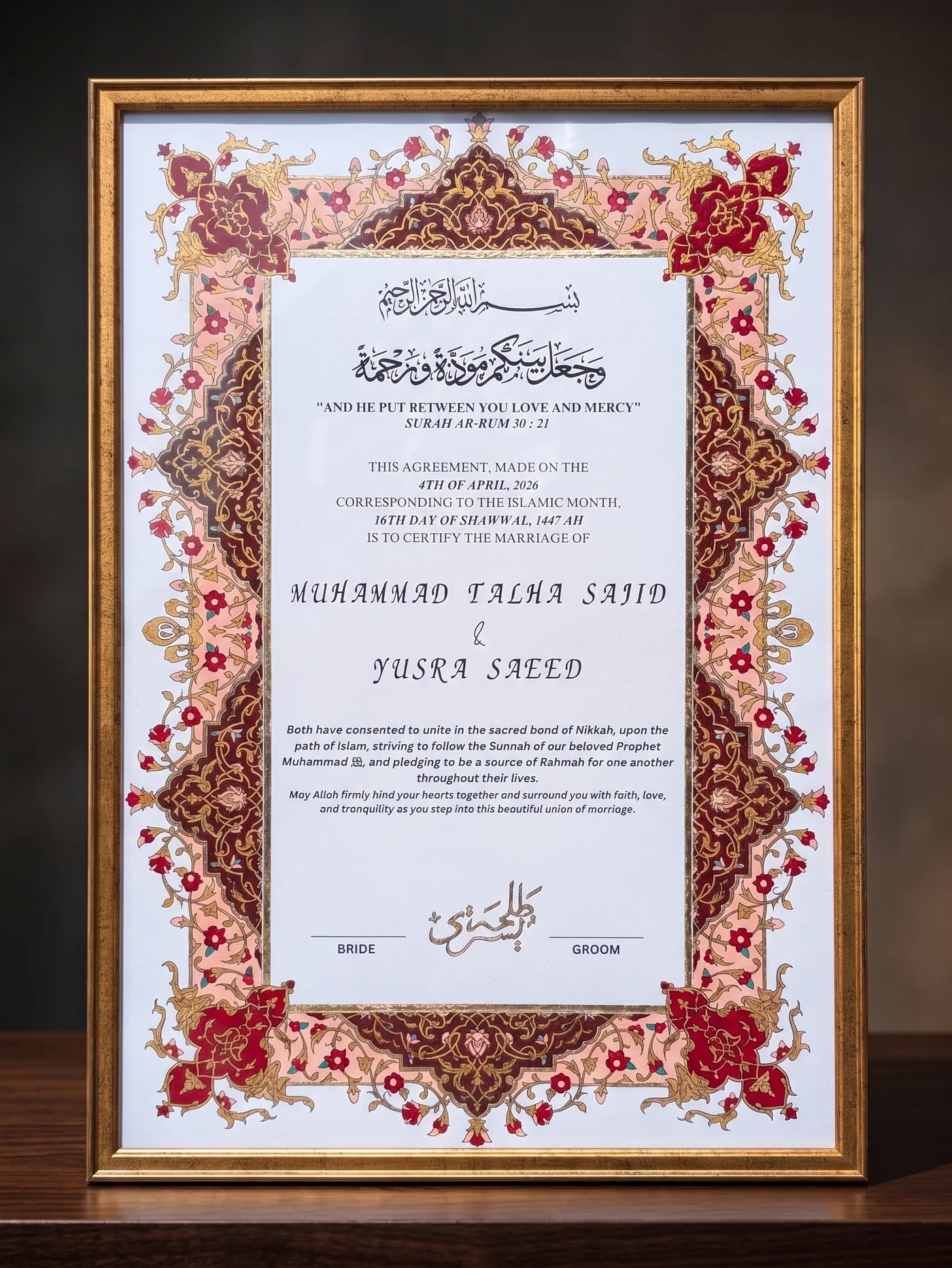
Border Patterns and Decorative Motifs
Around the calligraphy sits a frame of ornament. These borders are not merely decoration — they protect the sacred text, guide the eye and connect the certificate to centuries of Islamic manuscript tradition.
- ◆Tazhib (Persian illumination): Gold leaf, ultramarine, and delicate floral scrolls create a luminous frame. Tazhib is especially popular for couples who want a royal, heritage-inspired Nikah Nama design.
- ◆Islamic geometric borders: Repeating stars, polygons and interlacing lines form a border of infinite pattern. This style suits minimal, modern homes while staying deeply rooted in tradition.
- ◆Floral arabesques: Vines, lotus buds, peonies and leaves weave around the text to symbolise growth, life and the blooming of a new family.
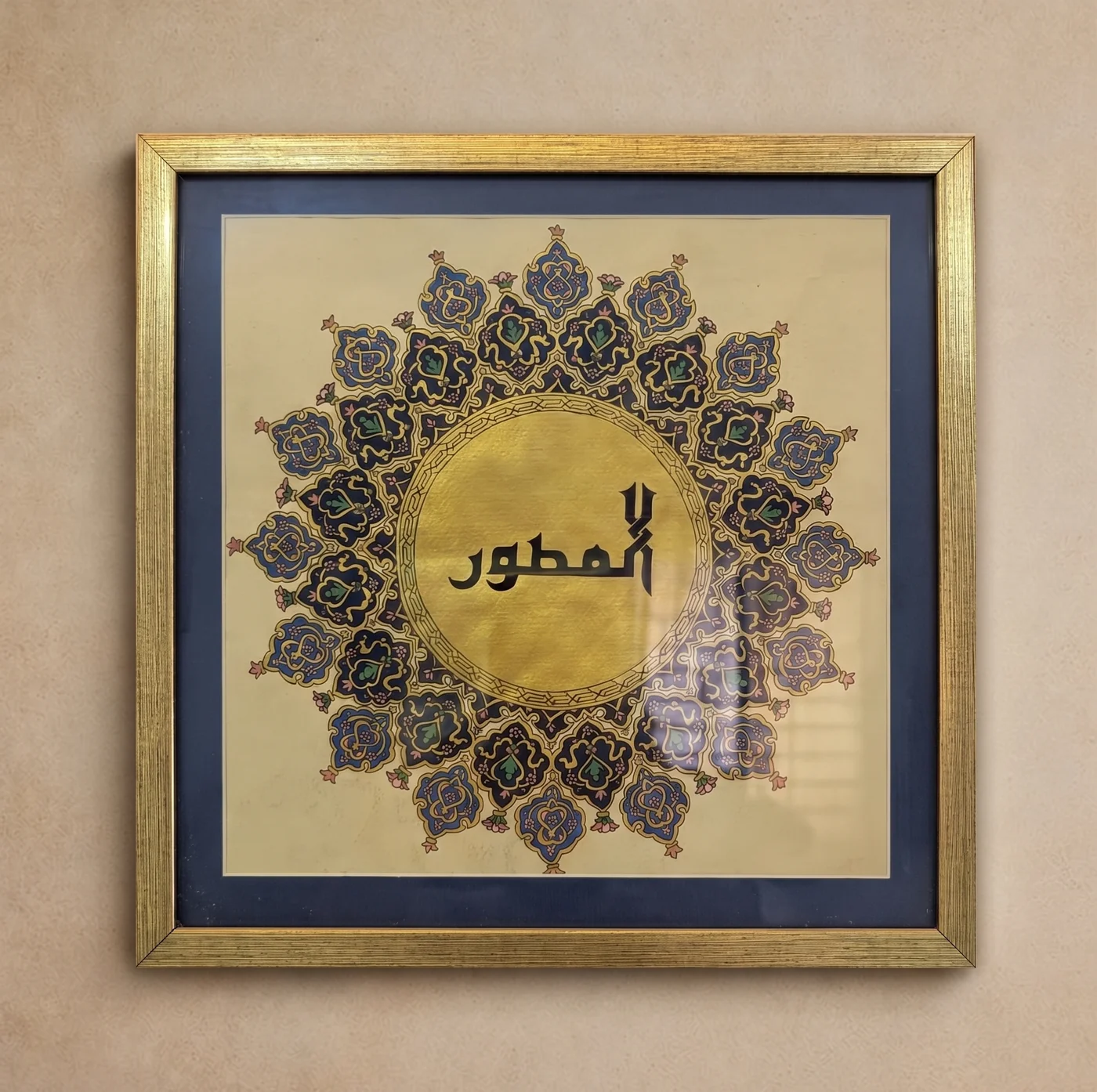
- ◆Central medallion: A roundel at the top or centre can hold the couple's names, the date of the Nikah, or a short Quranic verse. It becomes the visual heart of the design.
Why a Handmade Nikah Nama Matters
A printed Nikah Nama may satisfy paperwork, but it rarely stirs the heart. A handmade design is drawn, painted and gilded by an artist who considers spacing, proportion, colour harmony and the meaning of every word.
Handmade certificates also offer personalisation. The artist can include the couple's names in a central medallion, match the border colours to the wedding palette, and add motifs that reflect the family's heritage — for example, Mughal florals for a Pakistani wedding or Ottoman geometry for a Turkish ceremony.
Perhaps most importantly, a handmade Nikah Nama design becomes a family heirloom. It is the kind of piece that is unwrapped on anniversaries, photographed for new generations, and kept in a place of honour in the home.
How to Choose Your Nikah Nama Design Style
Every couple has a different vision. Here are three common directions that clients choose when commissioning a custom Nikah Nama design:
Classic Heritage
Thuluth headings, Tazhib borders and gold leaf accents on cream or parchment paper. Timeless and grand.
Modern Minimal
Clean Naskh text, generous white space, subtle geometric borders and a restrained palette. Perfect for contemporary interiors.
Regal Ottoman
Diwani flourishes, deep blues and reds, dense floral borders and a central illuminated medallion. Rich and ceremonial.
Commissioning a Custom Nikah Nama at FiziArt Studio
At FiziArt Studio, every Nikah Nama design is created entirely by hand. The process begins with a conversation about your script preferences, colour palette, size and framing. The artist then drafts the layout, paints the border and calligraphy, and applies gold leaf or metallic accents where desired.
Common sizes range from A4 (suitable for a folder or album) to larger A3 or custom dimensions for framing. You can also request matching guest books, canvas paintings, or Persian illumination pieces to create a cohesive wedding suite.
Ready to turn your Nikah Nama into a work of art?
Begin Your CommissionFrequently Asked Questions
- How long does a handmade Nikah Nama design take?
- Most custom pieces take between one and three weeks, depending on size, script complexity and drying time for layers of paint and gold leaf.
- Can the Nikah Nama be used as the official legal document?
- A decorative Nikah Nama design is usually a commemorative keepsake. You can provide the official legal text and the artist will render it beautifully, but the legal signatures must follow the requirements of your local registrar or religious officiant.
- What materials are used?
- FiziArt Studio uses acid-free paper or canvas, archival inks, natural watercolours, and genuine gold leaf or metallic pigment. These materials resist fading and yellowing over time.
- Do you deliver worldwide?
- Yes. Based in Pakistan, FiziArt Studio ships framed and unframed artwork worldwide using secure packaging.